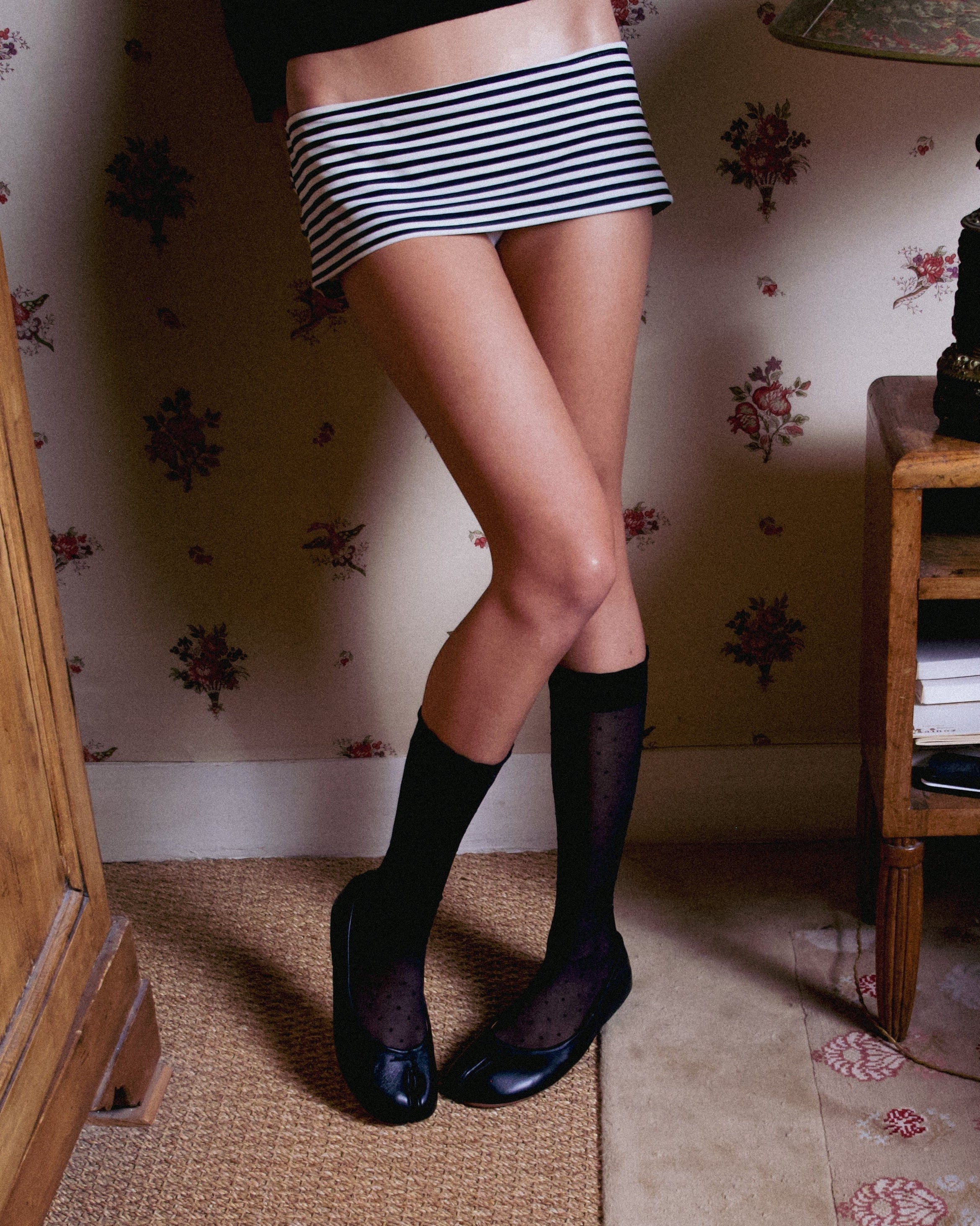
How to Wear Tabi Socks: A Quick and Effective Guide
Have you fallen for tabi socks but aren’t quite sure how to wear them or which shoes to pair them with? This guide explains the basics to help you put them on correctly, choose the right footwear, and easily incorporate them into your everyday outfits.
How to Properly Wear Tabi Socks
Wearing tabi socks requires a few adjustments compared to regular socks. The key is choosing the right size and properly aligning the big toe separation.
Choose the right size
Size is crucial with tabi socks. Socks that are too small will create uncomfortable folds and compress your toes. Too large, and they will slip, causing the toe separation to sit incorrectly. Always check the brand’s size guide.
Adjust the toe separation properly
The toe divider should fit the natural shape of your foot. It should neither be too tight nor too loose. If you feel discomfort or friction, the fit is not optimal.
Choose the right materials
Opt for cotton or cotton-elastane blends. These materials are breathable and provide the right balance between support and flexibility. Avoid synthetic fabrics that can cause sweating.
Avoid pulling too tightly
Do not overstretch the sock when putting it on. A tabi sock that is too tight can restrict blood circulation and leave uncomfortable marks.
Which Traditional Shoes to Wear with Tabi Socks?
Traditionally, tabi socks are worn with Japanese sandals such as:
- Geta: iconic wooden platform sandals
- Zori: thinner and more elegant, often worn with a kimono
- Jikatabi: outdoor footwear with a rubber sole
These shoes are specifically designed to accommodate the split-toe shape, making them the historical companions of tabi socks.
But let’s be honest: the most stylish combination today is with tabi shoes. Modern designs inspired by jikatabi have become true fashion pieces, blending comfort, originality, and cultural heritage. Paired with tabi socks, they create a look that is cohesive, bold, and distinctly Japanese.
Should You Wear Socks with Tabi Shoes?
Yes, wearing socks with tabi shoes is highly recommended. It is even the traditional way to wear them in Japan.
The most important thing is to choose socks adapted to the split-toe shape. Classic tabi socks or “split-toe” models are ideal. They naturally follow the separation of the big toe and ensure optimal comfort.
From a style perspective, socks offer several advantages:
- They highlight the graphic shape of tabi shoes
- They allow you to play with textures and colors
- They expand your outfit combinations
In winter, opt for longer socks that slightly show above the shoe. This creates a strong streetwear effect, especially with jeans or wide-leg pants.
In summer, you can also wear tabi shoes without socks for a cleaner, more architectural look. However, be mindful of comfort—try it for short periods first.
Practical tip: always try your tabi shoes with the socks you plan to wear, as thickness can affect sizing.
How to Wear Tabi Socks with Modern Shoes
Tabi socks are not limited to traditional Japanese footwear. They adapt perfectly to contemporary styles and can create unique looks with everyday shoes.
For a modern look, pair them with sneakers or minimalist shoes. The contrast between the traditional sock shape and urban footwear creates an interesting visual effect. Play with colors—for example, white tabi socks with black sneakers, or vice versa.
Sandals are also an excellent choice, as they highlight the split-toe design. This works particularly well with minimalist or strappy styles.
Modern versions of these socks make styling easier. These “tabi socks” are elastic, clip-free, and available in ankle or mid-calf lengths. More practical than traditional models, they fit easily into everyday shoes.
Tip: start with neutral colors like white, black, or beige. Once you feel comfortable, experiment with bolder tones.
Practical Tips for Wearing Tabi Socks Daily
Wearing tabi socks every day requires a few simple adjustments. First, choose the right size—socks that are too tight between the toes quickly become uncomfortable.
For care, wash them in lukewarm water and let them air dry. Avoid using a dryer, as it can damage the toe separation. Bamboo models tend to be more resistant to frequent washing.
In terms of style, adapt your tabi socks to your outfits. With jeans and sneakers, go for neutral colors like black or white. For a more original look, try subtle patterns under wide-leg pants.
In winter, wool tabi socks keep your feet warm inside boots. In summer, lightweight cotton versions are breathable in closed shoes. For sports, choose non-slip models that improve stability.
Final tip: start by wearing them for a few hours a day. Your feet will gradually adapt to the new sensation. Once comfortable, you can wear them all day without any issues.