Article: How to Wear Tabis: Our Style Tips!
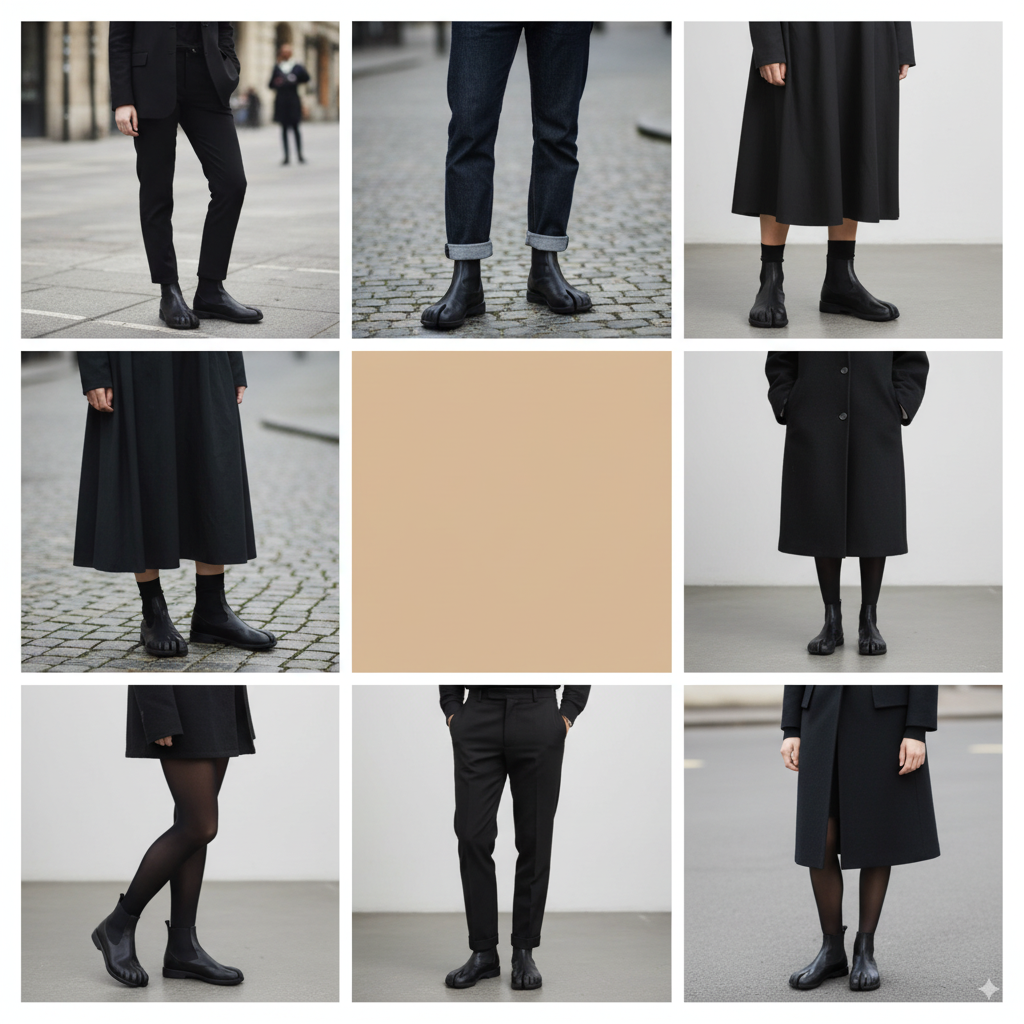

Often considered bold—even unsettling—tabi shoes intrigue as much as they captivate. With their distinctive shape—a clear separation between the big toe and the others—they never go unnoticed. Yet these iconic shoes from Japan are not merely a designer eccentricity. When thoughtfully integrated into your wardrobe, they can become a true stylistic signature.
Tabi shoes originate in Japan, where the word originally referred to split-toe socks worn with traditional sandals such as zōri or geta. At the beginning of the 20th century, they evolved into jika-tabi—reinforced versions with sturdy soles used by workers for their comfort and mobility.
Today, tabi have experienced a resurgence in contemporary fashion, particularly thanks to houses such as Maison Margiela, which transformed them into a fashion icon in their own right. Available as ankle boots, sandals, sneakers, or even loafers, tabi offer a bold aesthetic alternative to the classic shoe.
💡 Good to know: the word tabi originally means “sock” in Japanese. Today it is used to refer both to the split-toe socks themselves and to the shoes inspired by the traditional design.
One of the great strengths of tabi shoes is their ability to adapt to a wide variety of clothing styles. Far from being reserved for avant-garde audiences, they can appear subtle or extravagant depending on their shape, material, and styling.
In a minimalist look, they add an unexpected twist: a pair of black tabi ankle boots with raw denim and a white shirt instantly works. For a more graphic or artistic style, metallic or printed models are perfect for creating a strong statement. Finally, in a utility or workwear approach, canvas or suede tabi recall their functional origins while integrating naturally into a modern wardrobe.
Before detailing each season, here is a quick overview of the types of tabi to favor depending on the weather, materials, and styling combinations:

In spring and summer, tabi become lighter and more breathable. Models in canvas, cotton, or soft leather replace heavier winter boots. They are also available as tabi sandals, ideal for sunny days.
Paired with flowing pieces such as long dresses, midi skirts, or linen trousers, tabi become both stylish and comfortable. They add a unique touch without sacrificing well-being.
For an everyday look, beige or white tabi worn with high-waisted wide trousers and a fitted tank top work beautifully. In the evening, metallic or patent leather tabi can be paired with a flowing black dress or a monochrome set for a bolder look. On vacation, tabi sandals offer originality without the bulk of heavier footwear.
In autumn and winter, tabi take on a more structured dimension. Lightweight models give way to sturdier leather ankle boots, sometimes lined to face colder temperatures. The split design remains unchanged, but the material transforms the look: supple black or burgundy leather adds sophistication, while camel suede or textured leather creates a more casual feel.
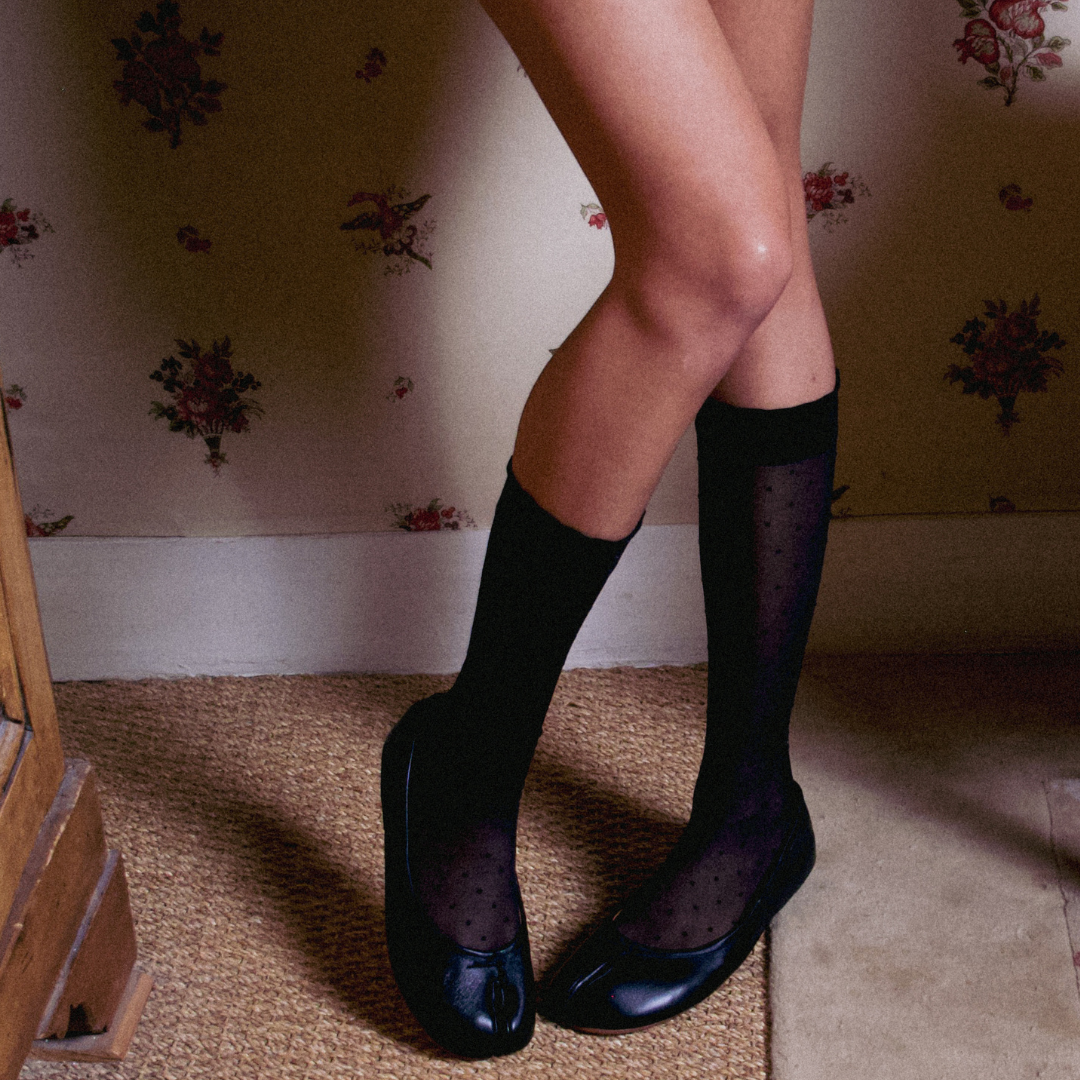
With cooler weather, tabi pair perfectly with long, enveloping pieces: belted coats, wool trench coats, wide trousers, or thick midi skirts. It is also the perfect season to experiment with layering, including visible or textured socks (ribbed, knit, or even colorful) that interact with the iconic split.
Color-wise, autumn and winter favor deep, understated tones: black, chocolate brown, taupe, olive green, and navy. These shades allow tabi to blend naturally into seasonal palettes or elegantly contrast with more neutral outfits.
Worn with cropped or slightly rolled trousers, tabi ankle boots become a central element of the outfit—functional, graphic, and bold at the same time.
Wearing tabi to the office may seem daring, but it is perfectly achievable with a refined and understated model. The ideal option: black leather ankle boots, smooth or grained, without metallic finishes or eccentric details.
Paired with tailored trousers, dark raw denim, or a midi skirt, they bring a sharp touch while remaining professional. Choose clean cuts and elegant fabrics (cool wool, structured cotton, silk) to balance the graphic split-toe effect.
💡 Tip: in a formal work environment, tabi work best if the rest of the outfit remains classic. Think of them as a subtle twist rather than a complete style break.
Tabi are also perfect for occasions when you want to express a strong personal style. In the evening, opt for patent leather, silver, or metallic models. They can transform a simple outfit into a bold look effortlessly. Paired with a flowing black dress or a monochrome outfit, they immediately become the focal point.
For travel, flat or low-heeled versions are ideal: easy to slip on, lightweight, and comfortable for walking while staying stylish. Tabi sneakers or summer sandals pair easily with a minimalist travel wardrobe while adding a distinctive detail.
For daily wear, tabi can easily replace your classic ankle boots or sneakers. Choose a neutral model (off-white, beige, camel leather, or black) in a soft material to prevent friction, and wear them just like any closed-toe shoe.
Comfort is often underestimated: the separation of the toes may feel unusual at first, but it can provide better stability, and some models even include ergonomic soles.


Pairing tabi with jeans is one of the easiest ways to incorporate them into an everyday outfit. Choose straight or flared cuts that reveal the split toe without compressing it. Wide pleated trousers or linen pants also work very well for a fluid and controlled look.
Raw denim + a blazer + black tabi creates a minimalist, sharp, and easy-to-wear combination.
Tabi pair beautifully with feminine lengths. Flowing dresses, pleated skirts, or straight cuts create interesting contrasts between fluidity and structure.
To avoid a “costume” effect, stay within a sober or tone-on-tone color palette and choose well-crafted tabi in quality leather or canvas.
This is one of the most common questions with tabi.
With socks: emphasizes their graphic character. Play with textures (ribbed knit, lurex, fine silk) and color contrasts.
Without socks: gives a cleaner, more architectural effect—ideal in summer or with highly designed models.
If you choose socks, make sure they are adapted to the split-toe design. Some brands offer split-toe socks specifically designed for tabi.
The material strongly influences the style, comfort, and durability of your tabi. Each texture brings a different aesthetic and suits specific uses:
💡 Good to know: avoid cheap synthetic materials if comfort is important. The toe separation can feel uncomfortable with stiff or poorly cut fabrics.


Looking for tabi suited to your style? Here are some ideas to explore:
Color choice greatly affects how your tabi are perceived. Neutral shades such as black, beige, cream, or gray integrate easily into an existing wardrobe while maintaining subtlety. They are especially suitable if you are new to this type of shoe or prefer a discreet look.
More daring colors—deep red, bright blue, silver, gold, or prints—turn tabi into the centerpiece of an outfit. They require confidence but can also become creative highlights in a well-balanced silhouette.
If you are buying your first pair, opting for a neutral color is usually the most versatile choice. Once you are comfortable with the style, you can experiment with more expressive models.
Tabi shoes often fit snugly, and sometimes slightly small depending on the brand, especially in rigid leather versions. If you are between two sizes, it is generally recommended to choose the larger one for comfort—especially if you plan to wear split-toe socks.
Before purchasing, try the shoes with the socks you actually plan to wear, as thicker materials may affect the fit. Some brands also provide their own size guides, which can be helpful to avoid surprises.
Finally, remember that some leathers soften over time, but that does not replace a good initial fit. Comfort should remain a priority, particularly for such a distinctive shoe.
Like any pair of shoes, tabi require basic care to remain beautiful and comfortable over time.
Store your tabi with shoe trees if possible to prevent creasing, especially around the split toe. If the soles are specific (as with some Japanese models), a cobbler familiar with this type of construction may be helpful.
