

Japanese fashion fascinates, intrigues, and inspires. At times minimalist, at times exuberant, it reflects a country where the old and the new coexist in perfect harmony. This article offers a deep dive into the history of Japanese fashion, from its ancient foundations to its current global influence. Special attention will be given to an iconic accessory: tabi — traditional split-toe socks that have transcended time by constantly evolving.
Over the centuries, the Japanese have developed a unique relationship with clothing. Beyond simple protection or appearance, garments express an aesthetic worldview tied to nature, seasons, silence, discipline, and spirituality. To understand Japanese fashion is also to understand a particular way of being in the world.
The Foundations of Japanese Fashion
The Influence of Chinese Dynasties and the Imperial Court
Japanese fashion emerged in a context of strong continental influence. Between the 6th and 9th centuries, Japan maintained close relations with China, particularly under the Tang dynasty, which was seen as a model of refinement and social organization. Japanese envoys to China (kentōshi) brought back the first sophisticated dress codes.
At that time, Japanese elites were heavily inspired by long robes with wide sleeves, silk fabrics, complex hairstyles, and accessories worn at the Chinese imperial court. Clothing became a way to express power, elegance, and alignment with great civilizations.
However, Japan quickly absorbed these influences and developed its own style. Rather than copying, it adapted them sensitively — rethinking colors, materials, and cuts to align with its climate, spirituality, and culture.
The Emergence of the Kimono and Its Early Codes
The appearance of the kimono marked a major turning point. Derived from the kosode (literally “small sleeves”), it became a staple garment during the Heian period, especially for court women. Its structure is deliberately simple: a T-shape made from two pieces of fabric sewn together, allowing freedom of movement while enhancing posture and presence.
The kimono is, above all, a coded garment. Its length, color, patterns, and even the way it is tied convey precise social information. Over time, it became a form of silent communication — a way to respect social harmony while expressing personal taste.
Each season has its own floral or natural motifs, and wearing out-of-season patterns is considered improper. Clothing thus reflects a deeply Japanese aesthetic sensitivity known as mono no aware: an awareness of the ephemeral beauty of things.
The Spiritual and Symbolic Role of Clothing
In traditional Japanese thought, clothing is not merely superficial — it has a spiritual and ritual function. In Shintoism, Japan’s native religion, physical and spiritual purity are essential. Clothing contributes to this purity: it must be clean, properly fitted, and worn according to established rules.
During religious rituals, Shinto priests wear immaculate garments, often white, symbolizing purification. This principle extends into daily life: removing shoes before entering a home, wearing white tabi during ceremonies, and so on.
💡 Good to know: The word “kimono” originally meant simply “a thing to wear.” It only became a specific term for the traditional garment in the 19th century.
The Golden Age of Traditional Clothing (Edo Period)
Social Codification Through Dress
During the Edo period (1603–1868), Japan was a closed country ruled by the Tokugawa shogunate. This era of relative peace fostered intense cultural development, where the arts, literature, theater — and fashion — flourished.
Society was divided into strict classes (samurai, farmers, artisans, merchants), each bound by specific dress codes. Sumptuary laws, for instance, prohibited merchants from wearing luxurious fabrics or embroidery, even if they could afford them.
Clothing became both a tool of social regulation and a space for subtle expression. Merchants developed an aesthetic of “hidden luxury,” using understated patterns, refined linings, and contrasts between matte and glossy fabrics.
The Refinement of Fabrics, Patterns, and Cuts
Textile techniques reached exceptional levels of craftsmanship during this time. Cities like Kyoto became renowned for sophisticated dyeing methods: shibori (Japanese tie-dye), yuzen (hand-painted designs), kasuri (blurred-pattern weaving), and katazome (stencil dyeing).
Materials included silk, linen, cotton, and even banana fibers. Natural fabrics, often dyed with indigo or plant extracts, were favored. Each garment was a work of art, designed to last, to be passed down, and to evolve with its wearer.
Artisans and tailors became respected figures, sometimes celebrated as true artists, with skills passed down through generations.
The Kimono as a Reflection of Status and Taste
In pleasure districts such as Yoshiwara in Edo, courtesans and kabuki actors set fashion trends. Their kimonos were sumptuous and often extravagant, yet always rich in symbolic meaning. Floral motifs, mythical animals, and calligraphic poetry woven into silk expressed moods, ideas, and social status.
The kimono was not static — it evolved with trends, seasons, and innovations. It was worn by all genders and ages, though with distinct sleeve lengths, forms, and tying styles.
Tabi: A Detail Full of Meaning
Origins of Tabi and Their Link to Japanese Sandals
Tabi appeared during the Muromachi period (15th century), alongside the rise of warrior classes and increasingly codified rituals. Initially made from leather or hemp, they were soon crafted in cotton, then considered a noble material.
Their defining feature is the separation of the big toe — a practical adaptation to traditional Japanese sandals such as waraji (rope), geta (wooden), and zori (straw), all secured by a central strap between the toes. Tabi thus became the ideal undergarment for the foot.
Beyond functionality, tabi quickly took on strong symbolic meaning. They became associated with discipline, elegance, and purity. In Noh theater, wearing tabi is ritualistic. In tea ceremonies, they are mandatory. Among samurai, white tabi symbolize restraint and inner discipline.
Colors vary depending on use: white for formal or religious occasions, black or blue for everyday tasks, and sometimes vibrant colors for performances. Their craftsmanship follows precise artisanal methods, often passed down through generations.
🛍️ Want to try tabi?
Our exclusive collection of traditional and modern tabi allows you to experience unique comfort while embracing an iconic piece of Japanese culture.
👉 Discover our models in cotton, soft leather, or neoprene
👉 Perfect for a zen, minimalist, or avant-garde look
👉 Fast shipping from France and easy returns

Contemporary Revival: Urban Fashion, Sportswear, Luxury
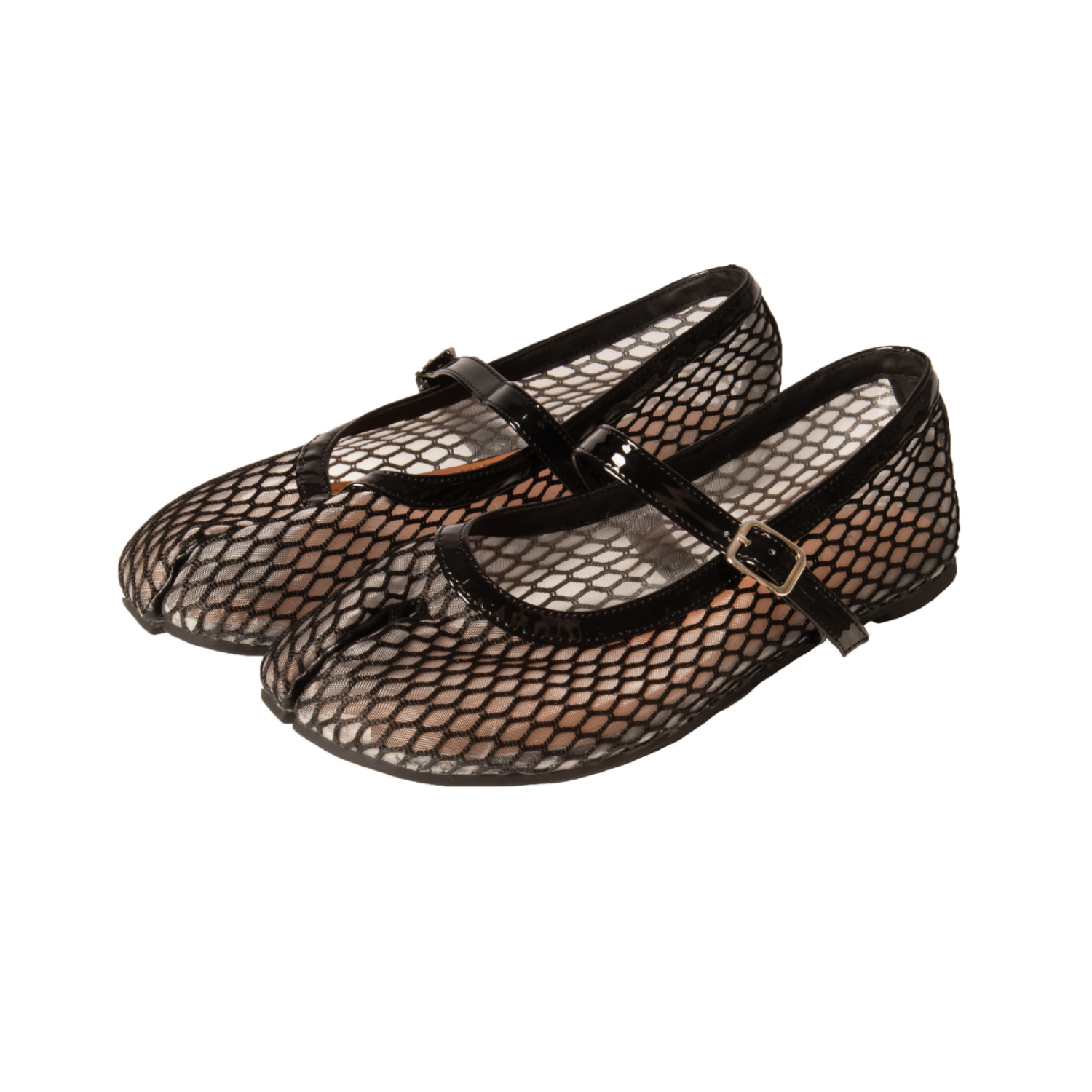
Since the 2000s, amid a renewed interest in traditional craftsmanship, tabi have experienced a resurgence. It began subtly in Japan, especially within artistic and alternative circles, before being embraced by streetwear brands and luxury houses alike.
Maison Margiela reintroduced tabi in the form of leather boots, now iconic. Meanwhile, Japanese brands like Sou•Sou, Jika-Tabi Marugo, and Tabio reinvent them with modern features: cushioned soles, technical fabrics, graphic patterns, and influences from sneakers and yoga wear.
Their appeal is dual: they evoke Japanese tradition while offering a new bodily experience. The split-toe design improves balance, enhances movement awareness, and provides a sense of freedom not found in conventional socks.
They attract minimalists, designers, dancers, athletes — and anyone seeking meaningful clothing adapted to modern life.
💡 Good to know: Many biomechanical studies suggest that separating the big toe improves posture, stability, and reduces muscular tension in the legs and back.
The Westernization of Japanese Fashion (Meiji Era to 1950)
The Arrival of Western Dress and the Partial Decline of the Kimono
The Meiji era (1868–1912) marked a radical shift. After more than two centuries of isolation, Japan rapidly modernized. The government enforced alignment with Western standards — in education, politics, and clothing.
Officials, soldiers, and teachers were required to abandon the kimono in favor of three-piece suits, ties, and bowler hats. The modern Japanese man became visually indistinguishable from a European of the 19th century.
For the general population, the transition was gradual. In rural areas and among women, the kimono remained dominant for decades. However, Western tailoring spread, fashion magazines circulated, and traditional dress slowly gave way to modern textiles.
Cultural Resistance: Women, Festivals, and Daily Life
Despite this shift, traditional fashion did not disappear. Women continued wearing kimono for special occasions, children wore them for school ceremonies, and festivals remained spaces where ancestral garments were proudly displayed.
Tabi also endured — worn at home, during ceremonies, or in manual professions. Workers, especially in construction or gardening, continued using jika-tabi (tabi with rigid soles) for their flexibility and durability.
This period marked the beginning of a dual clothing identity: a modern Japan looking outward, and a traditional Japan rooted in its heritage.
The Kimono Relegated to Tradition… Temporarily
After World War II, the kimono became largely ceremonial — worn for weddings, funerals, and graduations. Wearing it often required specific training.
However, in the 1960s–70s, some Japanese designers began revaluing traditional garments. The kimono became an object of design, a source of inspiration, and a subject of cultural and textile study — paving the way for future reinvention.
The Contemporary Japanese Fashion Revolution
Yohji Yamamoto, Rei Kawakubo, and Deconstruction
From the 1980s onward, Japanese designers revolutionized the global fashion scene. Names like Yohji Yamamoto, Rei Kawakubo, and Issey Miyake became synonymous with a conceptual, poetic, and radically innovative approach.
Their work features asymmetrical cuts, recycled materials, fluid silhouettes, and dark tones. They reject symmetry, gender norms, and seasonal trends — drawing from Japanese textile heritage while challenging Western consumerism.
The kimono’s T-shape and draping logic are reinterpreted. Clothing is no longer meant to seduce, but to provoke thought — about the body, movement, and identity.
Harajuku and Japanese Streetwear: Identity and Freedom
In the 1990s, Tokyo’s youth created a unique global phenomenon: Harajuku style. In this district, young people mix Western influences, traditional garments, costumes, punk, and kawaii into vibrant, expressive looks.
This streetwear movement is a statement of individuality within a society known for conformity. Outfits are bold, theatrical, and deeply creative.
Tabi naturally found their place here — paired with vintage dresses, hybrid sneakers, or cosplay outfits — becoming powerful aesthetic and symbolic accessories.
A Return to Roots: Craftsmanship and Hybridization
Since the 2010s, a new movement has emerged: a return to roots. Young Japanese designers, often trained abroad, are rediscovering natural textiles, traditional dyeing techniques, and ancestral craftsmanship.
Tabi are part of this wave, reimagined in modern forms: vegan versions, denim tabi, collaborations between artisans and sneaker brands, and limited-edition pieces.
This fashion promotes slower, more conscious consumption, aligned with ecological and spiritual values — reflecting the Japanese concept of wabi-sabi: the beauty of imperfection, simplicity, and impermanence.
💡 Good to know: Some traditional tabi workshops in Japan still use hand-sewing techniques dating back to the Edo period. Buying their products also supports a living cultural heritage.

