Japanese fashion has intrigued and inspired for decades. From refined minimalism to the eccentric looks of Harajuku, Japanese menswear is a fascinating blend of elegance, originality, and craftsmanship. But where should you start if you want to take inspiration from this style? What are the key pieces to know? And most importantly, how can you incorporate them into your own wardrobe?
In this guide, we explore the major Japanese styles, the essential pieces—including the iconic tabi—and some practical tips to help you adopt Japanese fashion without getting it wrong.
Why Japanese fashion appeals to men
Before diving into the details, it’s important to understand why Japanese fashion stands out so much compared to what we’re used to in Europe. Japan has managed to establish a strong identity that appeals equally to minimalism enthusiasts and fans of colorful streetwear.
A unique blend of tradition and modernity
Japan has always had the ability to merge the old with the new. In fashion, this translates into garments inspired by traditional clothing—such as the kimono or hakama—adapted for modern everyday wear. For example, wide and straight cuts echo historical silhouettes but are designed to be worn with sneakers or a contemporary jacket.
This approach allows men to adopt a style that feels both timeless and current, where cultural heritage blends seamlessly with modern trends.
The influence of Japanese culture on global fashion
Japanese designers reshaped the international fashion scene as early as the 1980s. Yohji Yamamoto and Comme des Garçons introduced a minimalist, dark, and deconstructed aesthetic that has had a lasting impact on menswear. Even today, major fashion houses continue to draw inspiration from their work.
But the influence doesn’t stop at luxury. Japanese streetwear, with its oversized silhouettes, bold prints, and layering techniques, has played a major role in shaping urban fashion worldwide.
The main styles in Japanese menswear
One of the strengths of Japanese fashion is its diversity. From sharp minimalism to expressive streetwear, multiple worlds coexist, allowing everyone to find their own identity.
Minimalism and tailoring
Japanese minimalism is built on clean cuts, neutral colors, and a strong focus on materials. It appeals to men looking for understated elegance. A straight wool trouser, a loose cotton shirt, and a lightweight jacket are enough to create a look that is both simple and refined.
This minimalism is also highly functional: garments are designed to last and adapt to different situations, whether for work or everyday life.
Streetwear and Harajuku
On the opposite end of the spectrum, Tokyo’s Harajuku district is the birthplace of eccentric styles. Here, anything goes: layered colorful clothing, bold accessories, and influences from manga or punk culture. This Japanese streetwear has given rise to globally recognized brands such as A Bathing Ape and Neighborhood.
This style appeals to men who want to express themselves and experiment beyond traditional fashion codes.
Denim and workwear
Japan is also renowned for its craftsmanship in denim. Brands like Momotaro and OrSlow produce exceptional selvedge jeans, inspired by both American workwear and Japanese artisanal techniques.
This workwear aesthetic also includes chore jackets, durable shirts, and canvas trousers. It’s a more rugged style, appreciated for its authenticity and longevity.
Key pieces in Japanese menswear
While styles may vary, certain garments are consistently present and have become iconic. Here are some essential pieces to know when exploring Japanese fashion.
Wide jackets and trousers
Japanese silhouettes prioritize comfort and fluidity. Jackets often feature relaxed cuts, as do trousers, allowing for freedom of movement. These volumes echo traditional garments but are modernized through technical fabrics and contemporary details.
Japanese denim
This is arguably one of the highlights of Japanese fashion. Selvedge denim, woven on traditional looms, offers exceptional quality and durability. Enthusiasts value the unique patina that develops over time, making each pair of jeans truly personal.
Tabi, the iconic Japanese footwear
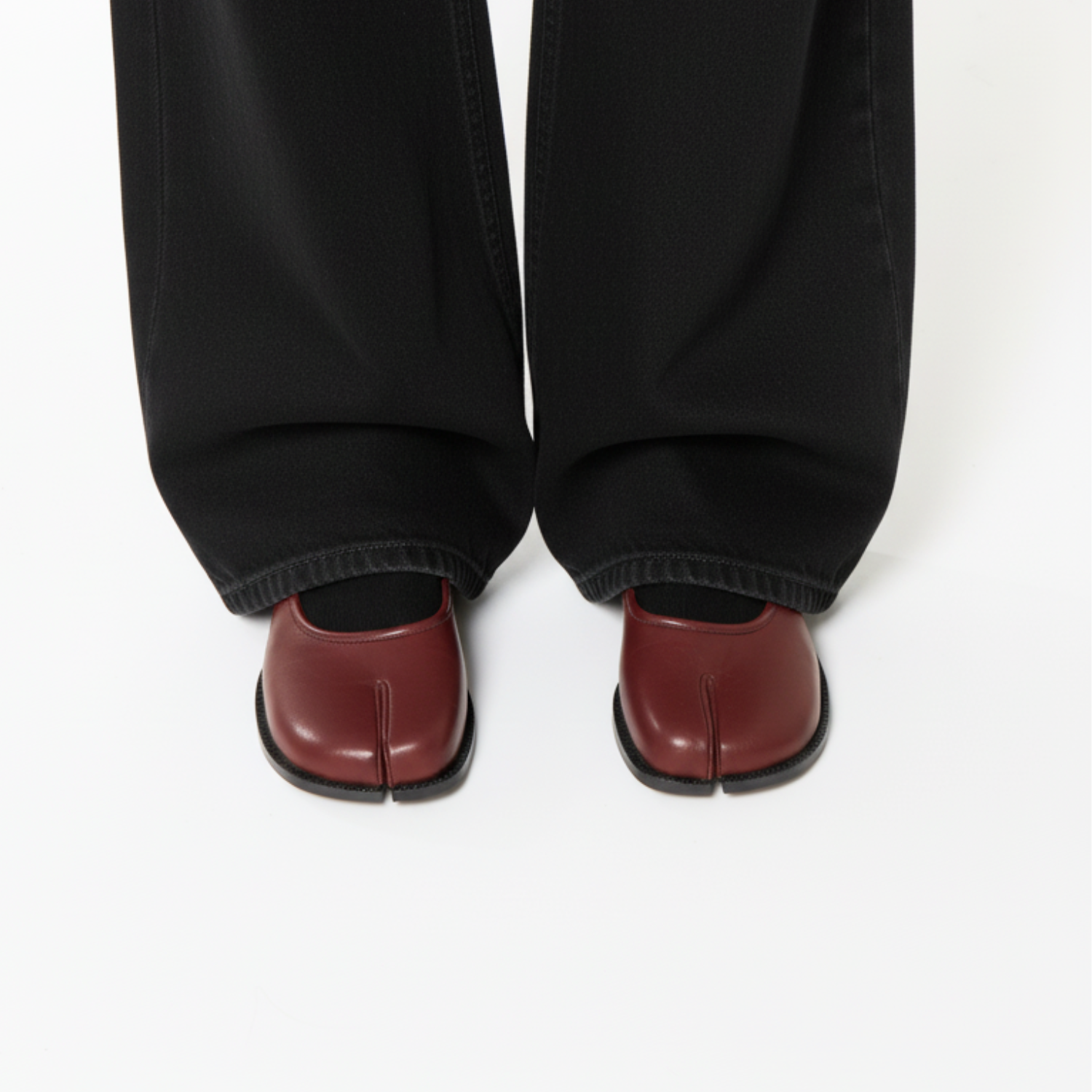
It’s impossible to talk about Japanese fashion without mentioning tabi. These split-toe shoes, derived from traditional socks, have become a true symbol of Japanese style.
Originally worn by workers and craftsmen, they have been reimagined by contemporary designers, including Furansu Paris, which offers a modern and elegant interpretation suited to today’s aesthetic.
Intriguing and sometimes divisive, men’s tabi shoes stand out precisely because they break away from the ordinary. They bring a unique touch to an outfit while embodying what makes Japanese fashion so distinctive: a subtle balance between heritage, boldness, and innovation.
How to wear Japanese fashion daily
The goal is not to dress in costume or copy a full look. The key is to take elements from Japanese fashion that resonate with your personality and integrate them naturally into your wardrobe.
Tips for mixing with a European wardrobe
The easiest approach is to start with one statement piece. For example, wide Japanese trousers can be paired with a classic white shirt and sneakers. Similarly, selvedge denim works perfectly with a basic t-shirt and a Western-style jacket.
The secret lies in balance: one standout Japanese piece combined with a more understated outfit creates a unique yet wearable look.
Mistakes to avoid
Trying to mix everything at once is probably the biggest mistake. Layering too many strong pieces without coherence can result in an overly busy outfit. It’s better to take it step by step—start with an oversized jacket, then try Japanese denim, before moving on to more daring looks.
Another common pitfall is neglecting quality. Japanese fashion is built on attention to materials and craftsmanship. Choosing low-quality imitations means missing the very essence of this style.